Migration is a complex issue that needs to be handled humanely, fairly and with great sensitivity.
Europe needs migrants to tackle its demographic decline, but disorderly migration leads to exploitation, human trafficking and tragic loss of life at sea.
Europe’s refugee crisis of 2015-2016 exposed shortcomings in the EU’s migration system that still haven’t been fully addressed, and Russia’s military invasion of Ukraine in 2022 that caused millions of people to flee their homes shows just how quickly a humanitarian crisis can develop.
The European Commission’s Pact on Migration and Asylum will create a humane, comprehensive European approach to migration that can help those in need of protection, and also attract migrants with the skills needed to contribute to Europe’s sustainable growth.
Ireland, with its own history of migration, will play its part in implementing the new Pact and act in solidarity with other Member States.
Pact on Migration and Asylum
During the refugee crisis of 2015/16 Member States on the EU’s external borders struggled to cope with large migrant flows. The different asylum systems across Europe lacked proper coordination, and many asylum seekers were left living in substandard conditions for lengthy periods before having their applications processed.
More recently in Ireland, authorities ran into difficulties finding enough temporary accommodation for asylum seekers after the arrival of thousands of Ukrainians fleeing war in their homeland.
Disorderly migration causes confusion that can result in the exploitation of vulnerable migrants by criminal groups, and the manipulation of local populations by political extremists.
The Pact on Migration and Asylum proposes predictable, reliable management systems that will ensure humane treatment for refugees and provide common European solutions for this European challenge.
It will strengthen borders, modernise the EU’s asylum system and enhance cooperation with partner countries to tackle the root causes of disorderly migration.
The Pact will also include measures aimed at attracting skills and talent to Member States through legal migration, which will help address labour shortages in a number of sectors across the EU.
The Pact is a reform of the EU’s Common European Asylum System (CEAS). CEAS was established in 1999, but has failed to get full support from all Member States.
One of the issues is CEAS’s Dublin Regulation, which establishes the Member State responsible for asylum applications, based primarily on the first point of irregular entry.
The Dublin Regulation dates back to 1990 and was designed to prevent multiple asylum applications in different countries, but it has proved inadequate in dealing with crisis situations and modern migration patterns.
All countries have an obligation to protect refugees and the Dublin Regulation placed an unfair burden on a handful of Member States struggling to cope with mass migration at their borders during the refugee crisis in 2015-2016.
Political agreement on the Pact was reached in June 2023, paving the way forward for new regulations on asylum procedures and migration management. It’s hoped to finalise the Pact before June 2024.
Benefits of the Pact on Migration and Asylum include:
- Stronger trust: Fast, integrated procedures will help foster trust between Member States.
- Better managed borders: The Pact will result in well-managed Schengen and external EU borders.
- Effective solidarity: Member States facing a crisis migrant situation will be entitled to support measures from the EU and other Member States.
- Skills and Talent: Developing legal pathways for migrants will attract global talent and help make Europe an open, connected continent and reduce irregular migration.
- International partnerships: Developing partnerships with key countries of origin and transit will help stem irregular migrant flows.
- Flexibility and resilience: Instruments in the new Pact will help ensure fast and effective common responses to a migrant crisis when it begins to emerge.
Actions on asylum and migration
Solidarity and shared responsibility are at the heart of EU policies on migration and asylum. Because of EU unity, the European Commission was able to act swiftly when Russia invaded Ukraine and forced millions of people to seek refuge.
A Solidarity Platform was established to allow Member States and EU agencies coordinate support and organise transfers of people to countries with reception capacity.
Financial support for Member States hosting Ukrainian refugees was quickly mobilised and the Temporary Protection Directive triggered to offer fast, effective assistance to people fleeing the war.
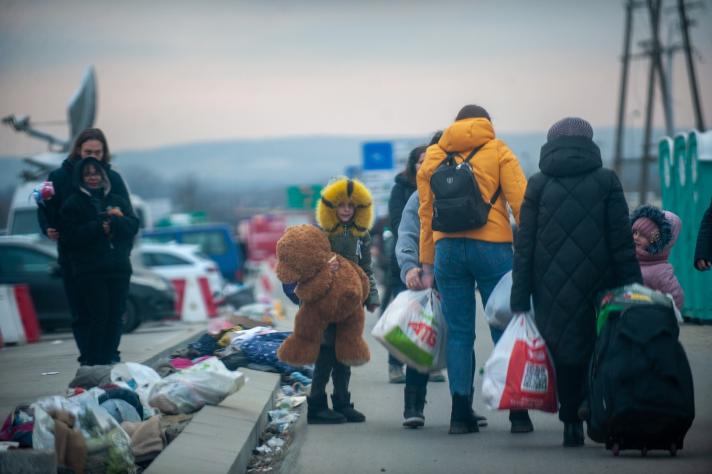
Under Temporary Protection, Ukrainian refugees have a right to residence, housing, health care, education and work for a limited period of time.
To help fund this protection, Member States can redirect resources from EU Cohesion Policy funds and the Fund for European Aid for the Most Deprived (FEAD).
Measures have also been put in place to protect asylum seekers from other parts of the world. A renewed EU Action Plan against migrant smuggling is helping reduce the organised exploitation of migrants, while an EU Strategy on voluntary return and reintegration for migrants with no right to stay has been adopted.
EU border management organisation, Frontex, has been transformed into a stronger European Border and Coast Guard Agency that is more effective and efficient in managing the EU’s external borders.
Upgraded status agreements that allow for the deployment of European Border and Coast Guard Agency staff for joint operations on the territories of countries bordering the EU will also help manage external borders.
Agreements have been signed or are being negotiated with Albania, Serbia, Montenegro, Bosnia and Herzegovina, and North Macedonia.
“By working together, we can ensure that migration is managed in an orderly, humane, and fair way, protecting fundamental rights. That means using our collective weight to the maximum: the progress made this year offers a tangible demonstration of how the EU is determined to keep up the momentum to deliver our common work on migration and to reassert the effectiveness of our borders.”
Ursula von der Leyen, European Commission President, October 24, 2023.
New legislation under discussion to support the Pact on Migration and Asylum includes:
- Rules governing the use of the Eurodac fingerprint database for identifying asylum seekers and irregular border-crossers will be reinforced.
- The EU Screening Regulation to ensure fast identification of asylum seekers will be revised and improved.
- The Asylum Procedure Regulation that establishes common procedures across all EU states for handling international protection requests is being further streamlined.
- The Asylum and Migration Management Regulation will replace the Dublin Regulation and will include measures to prevent abuse and secondary movements.
- The Crisis Regulation will allow Member States to adjust migration rules and request solidarity and support measures from the EU during a crisis migrant situation.
- The Commission is also presenting new proposals to update the legislative framework fighting migrant smuggling.
Temporary Protection Directive
Tackling root causes
The UN International Organization for Migration´s (IOM) Missing Migrants Project recorded more than 29,000 deaths during migration journeys to Europe between 2014 and 2021.
Tackling the root causes of irregular and forced migration is a key feature of the Pact on Migration and Asylum. The EU is already the world’s leading humanitarian aid donor but developing partnerships with non-EU countries where large numbers of migrants originate is also key to reducing disorderly migration.
One of these partnerships is with Türkiye, which has the largest refugee community in the world with over four million people, mostly Syrian, under international protection. Since 2015, the EU has mobilised over €9.5 billion for refugees and host communities in Türkiye.
This partnership provides basic support for refugees and has helped significantly reduce the number of illegal border crossings between Türkiye and Greece.
In June 2023, the EU and Tunisia agreed to work together on a comprehensive partnership package that includes a common priority to tackle irregular migration to and from Tunisia and prevent the loss of life at sea.
In October 2023, the European Commission presented an Action Plan for Eastern Mediterranean migration that includes measures to prevent irregular departures, combat smuggling and provide legal pathways for asylum seekers.
The plan complements EU Action Plans for the Western Mediterranean and Atlantic, Central Mediterranean and Western Balkan migration routes.
These targeted plans involve reinforced cooperation with partner countries and international organisations to ensure better border management and management of migration.
They also include measures to fight against people smuggling, create legal pathways to the EU and support refugees in partner countries.
EU Humanitarian aid to Türkiye
The European Union and Tunisia
Action Plan for the Western Mediterranean and Atlantic routes
Ireland's role
By September 2023, over 93,000 Ukrainians fleeing from war had arrived in Ireland.
These arrivals were eligible for humanitarian support through the EU Temporary Protection Directive (TPD) for people displaced by the Russian invasion of Ukraine. Temporary Protection for Ukrainians has been extended until March, 2025.
The EU provides constant support in meeting the needs of those fleeing the invasion of Ukraine and the Commission has paid more than €3.5 billion in advance payments to Member States from the Recovery Assistance for Cohesion and the Territories of Europe (REACT-EU), of which €53 million was allocated to Ireland.
Ireland currently has no European Union obligation to take in refugees as it has an opt-in or opt-out clause on individual proposals in the areas of freedom, security and justice through the EU Treaty of Lisbon.
When there is an EU legislative proposal in these areas, Ireland has three months to decide whether to opt-in or not. If it doesn’t opt-in, discussions go ahead, and any adopted legislation doesn’t apply in Ireland.
However, Ireland opted-in to the TPD for Ukrainians and chose to participate in EU relocation and resettlement schemes through the Irish Refugee Protection Programme (IRPP), which was established as part of Ireland’s response to the 2015-16 migrant crisis.
Under this programme, Ireland accepted over 4,000 people into the State through EU and UNHCR Refugee Resettlement Programmes.
Ireland will benefit from €66.9 million of EU funding to help manage migration from 2021 to 2027. The funding is made up of €45.1 million from the Asylum, Migration and Integration Fund (AMIF) and €21.8 million from the Internal Security Fund (ISF).
The AMIF supports Member States in managing migration flows while funding under the ISF supports efforts to protect the security of citizens and manage the EU’s external borders.
Asylum, Migration and Integration Fund
Irish Refugee Protection Programme
Irish sea rescues
One of the most heart-wrenching aspects of irregular migration in recent years is the huge numbers of refugees who have tragically lost their lives at sea.
The European Union responded when the 2015/16 migrant crisis first emerged by tripling the budget for search and rescue operations carried out by the EU’s border protection agency, Frontex.
Ireland played its part in these humanitarian rescue operations by deploying Irish Navy ships to help rescue migrants from illegally overcrowded boats.
Between 2015 and 2017 Irish Defence Forces rescued over 10,000 migrants and apprehended many suspected smugglers and traffickers.

Óglaigh na hÉireann was recognised with an Irish People of the Year Award in December 2015 for the work of the Naval Service’s humanitarian missions in the Mediterranean.
The following year, the Defence Forces received the European Movement Ireland European of the Year award for its contribution to international peacekeeping and humanitarian work.
Facts to consider
- According to UN refugee agency UNHCR, 108.4 million people worldwide were forcibly displaced as a result of persecution, conflict, violence, human rights violations and other events by the end of 2022.
- Most of those (58%) forced to flee their homes never cross an international border, remaining displaced within their own countries.
- The majority of those who become refugees do not come to Europe, with 70% moving to countries neighbouring their country of origin.
- The number of forcibly displaced and stateless people in Europe stood at 21.8 million at the end of 2022, including almost 12.4 million refugees, 1.3 million asylum-seekers, 7.2 million internally displaced people (IDPs) and 474,000 who were stateless.
Latest news on migration
The European Commission has welcomed the result of today’s vote in the European Parliament, endorsing the political agreement on the Pact on Migration and Asylum.
The political agreement reached today by the European Parliament and the Council on the Pact on Migration and Asylum constitutes a major breakthrough towards a common system for managing migration in the EU.
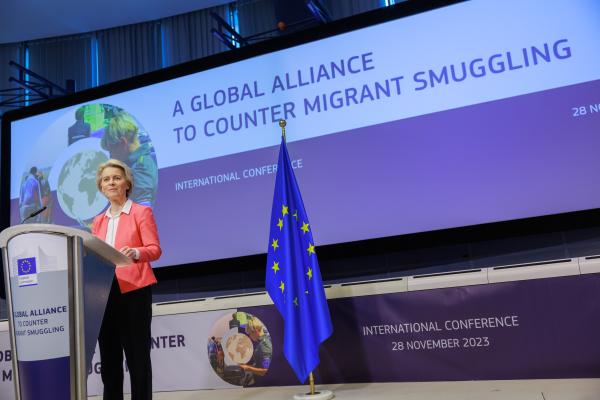
The European Commission has proposed new legislation to prevent and fight migrant smuggling. The Commission has also launched a Call to Action for a Global Alliance to Counter Migrant Smuggling, at the International Conference hosted in Brussels on 28 November.
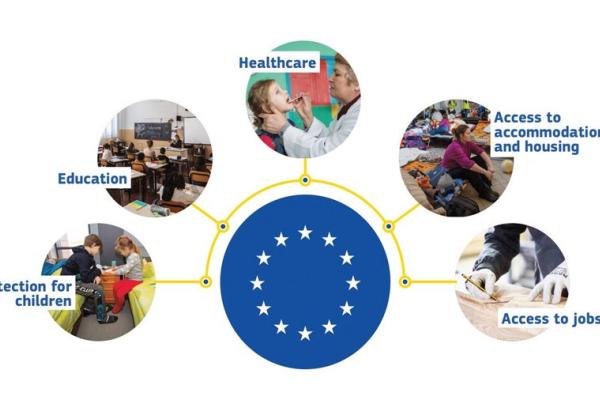
The European Commission has outlined the actions being taken to support Member States in meeting the needs of those fleeing the war against Ukraine and its people.
The site contains information about crossing the border, rights on arrival and information about onward travel in Ukrainian and English
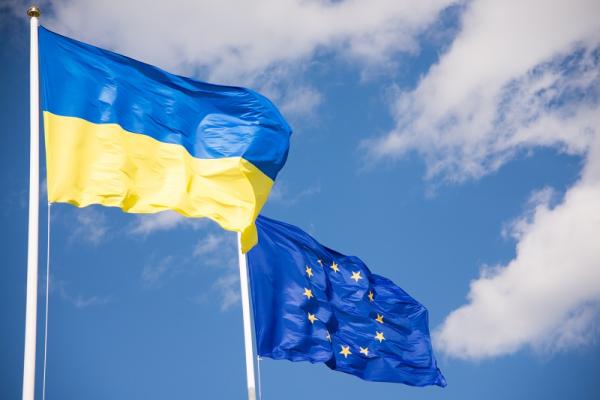
European solidarity in action is helping people fleeing war in Ukraine through direct humanitarian aid, emergency civil protection assistance, support at the border, as well as a clear legal status allowing them to receive immediate protection in the EU.
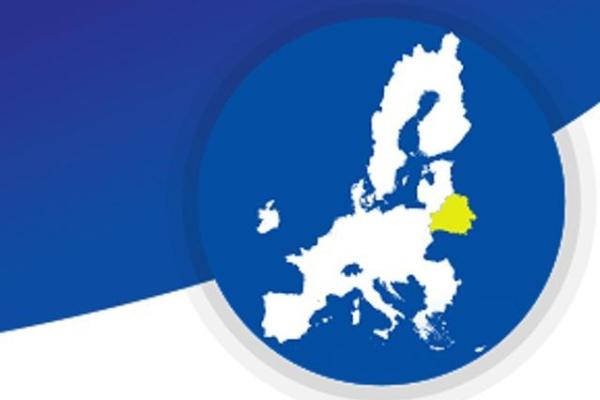
The European Commission has proposed measures to prevent and restrict the activities of transport operators that engage in or facilitate smuggling or trafficking of people into the EU.
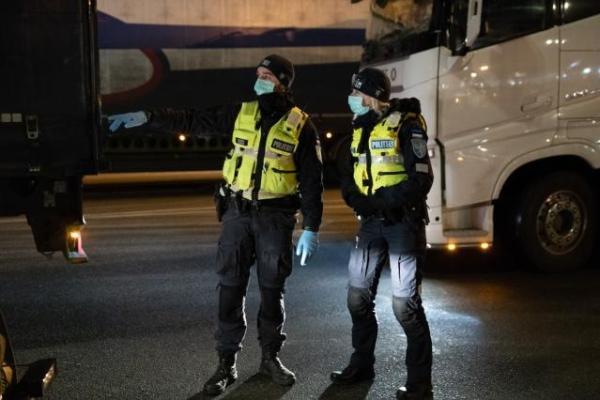
New 5-year strategies to boost cooperation across the EU in the fight against organised crime and human trafficking