Ireland’s clean, fresh air, lush green landscapes and stunning coastlines are famous throughout the world.
However, we are now facing a global crisis that means our scenic environment is under threat, and its future can no longer be taken for granted.
Climate change is the greatest challenge of our times and urgent action is required to prevent irreversible damage to our planet that will lead to biodiversity loss, coastal flooding, increased threats to health and numerous other consequences.
Tackling climate change is one of the European Commission’s top priorities and the European Green Deal is its ambitious plan to transform Europe into the first climate-neutral continent.
European Green Deal
The European Green Deal is a comprehensive package of policy initiatives aimed at achieving climate neutrality across the EU by 2050.
It features a wide range of actions and targets in different sectors such as energy, transport, industry, environment and agriculture. The goal is to transform the EU into a resource-efficient, competitive circular economy that is fair and inclusive for every individual and region.
The Green Deal includes strategies to protect and restore ecosystems, prevent the loss of wildlife, and promote more sustainable food systems.
“The European Green Deal was born out of this necessity to protect our planet. But it was also designed as an opportunity to preserve our future prosperity.”
Ursula von der Leyen, European Commission President, State of the Union 2023.
The EU’s Biodiversity Strategy for 2030 is Europe’s long-term plan to halt and reverse nature loss. A key element of the Strategy is the EU Nature Restoration Law, which aims to repair 80% of Europe’s wetlands, rivers, forests, grasslands, marine ecosystems, and the species they host.
When it comes to food, the Farm to Fork Strategy is helping to make supply systems fair and healthy, while safeguarding food security and affordability. It also rewards farmers who provide environmental and climate-friendly services.
The EU is committed to reducing its net greenhouse gas emissions by at least 55% by 2030, compared to 1990 levels. The Commission’s ‘Fit for 55’ package of legislation was created to achieve this across all sectors of the EU economy.
The REPowerEU plan builds on ‘Fit for 55’ to speed up the roll-out of renewables to replace fossil fuels and reduce Europe’s dependency on energy imports as quickly as possible. The Commission is recommending setting a target of reducing emissions by 90% for 2040.
Ensuring that the clean transition is fair to everybody, especially the most vulnerable, is a core principle of the Green Deal.
Support for those affected by energy poverty or climate change events can be made available through the Just Transition Fund, the Social Climate Fund, the EU Solidarity Fund and the EU Civil Protection Mechanism.
The EU is a global leader in the planet’s fight against climate change and all Member States have signed and ratified the UN Paris Agreement on legally binding global climate targets.
The EU and its Member States have also adopted the UN Kunming-Montreal Global Biodiversity Framework, an ambitious international roadmap for a world living in harmony with nature, while EU leadership was critical in conclusion of the UN High Seas Treaty, which protects biodiversity in oceans and seas.
EU Energy Climate change, Environment
Green Deal progress
The fight to protect the planet from climate change is ongoing, and the Commission continues to propose and introduce measures to achieve Green Deal ambitions.
Latest proposals and developments towards meeting Europe’s climate neutrality goal include:
- The Green Deal Industrial Plan to scale up mass production of clean technologies in the EU.
- A revision of the Energy Performance of Buildings Directive that provides a legal framework to reduce emissions and energy use in homes, workplaces, schools, hospitals and other public buildings.
- A new soil monitoring law to strengthen the resilience of EU food systems and farming in general, and encourage the sustainable use of plants and soil.
- Support for new techniques in biotechnology to safely develop innovative genomic techniques that can enable the development of climate-resilient crops.
- Legally binding food waste reduction targets to be achieved by Member States by 2030.
- New rules on the protection of animals during transport.
- A revision of Ambient Air Quality Directives that will see regular reviews of air quality standards in line with latest scientific evidence and ensure people suffering health damage from air pollution have the right to be compensated if air quality rules are violated.
- Revision of the Urban Wastewater Treatment Directive to ensure cleaner rivers, lakes, groundwaters and seas, as well as more cost-effective wastewater treatment.
- The Carbon Border Adjustment Mechanism to encourage non-EU companies to find cleaner ways to make carbon-intensive products like cement, iron and steel.
- New durability and reparability of products measures that will make almost all physical goods, from smartphones to washing machines, repairable, recyclable and energy efficient throughout their lifecycle.
- New consumer rights that include a ban on so-called ‘greenwashing’ - where a company gives misleading eco-friendly information on how its products are.
- Revision of EU laws on packaging waste to create more reusable packaging options and clear labels to support recycling.
Green Deal in Ireland
All EU Member States need to demonstrate how EU climate targets will be met at national level through regularly updated National Energy and Climate Plans (NECPs).
Draft NECPs are analysed by the European Commission and an overall assessment with country-specific recommendations are provided before Member States submit their final NECPs.
In its assessment of Ireland’s latest draft NECP the Commission outlined the Plan’s merits, as well as shortcomings that needed to be addressed before being finalised in 2024.
- Ireland is not on track to meet its national greenhouse gas target of -42% in 2030 compared to 2005 levels;
- The draft sets an objective for Ireland to reach an 80% share of renewable electricity generation by 2030, driven by auctions under the Renewable Electricity Support Scheme;
- The draft didn’t sufficiently elaborate on how revised EU energy and climate targets would be met;
- The draft plan outlined various measures aimed at addressing energy poverty comprehensively;
- The draft plan indicated that Ireland would fall short of EU 2030 targets for land use and forestry;
- The draft provided good information on the most impacted areas of the transition away from peat and carbon intensive industries;
- There were few detailed measures in the plan on how to reduce gas demand or how to accelerate the deployment of electricity storage.
The European Commission has been instrumental in supporting and encouraging the Irish Government to take actions, such as protecting Irish peat bog habitats, to help Ireland reach its climate change targets.
Ireland’s raised bogs are among the world’s oldest, dating back over 10,000 years, but only 1% remain after generations of land reclamation and turf-cutting.
A number of measures to protect bogs have been introduced by the Irish authorities to stop this damaging practice which destroys natural vegetation, releases carbon dioxide into the atmosphere and alters the hydrology of the bog.

EU funding has supported several raised bog restoration projects, but this work hasn’t been enough to reverse the damage still being done.
The European Commission has called on Ireland to take action to stop the cutting of peat a number of times since 2011, and in March 2024 decided to refer Ireland to the Court of Justice of the European Union for failure to apply the Habitats Directive.
In recent times, Ireland has also been referred to the Court of Justice for failing to prevent invasive alien species damaging nature, failing to correctly transpose the Water Framework Directive into national law and failure to comply with the requirements of the Drinking Water Directive.
National energy and climate plans
Funding Ireland's transition
Europe becoming the first climate-neutral continent by 2050 requires significant investment from both the public and private sectors.
The European Green Deal Investment Plan creates a framework to facilitate this and stimulate sustainable investments of at least €1 trillion between 2020 and 2030.
The Just Transition Mechanism (JTM) is the investment plan’s key financial tool for providing targeted support to regions and sectors most affected by the transition towards the green economy.
Ireland’s Territorial Just Transition Plan has EU funding of €84.5 million and with Irish Government co-funding provides for investments of up to €169 million. It is mainly targeted at the economic transition of the Midlands region which is being impacted by the ending of peat extraction.
The European Commission estimates that potential funding from EU sources to Ireland between 2021 and 2027 amounts to up to €13.3 billion.
Ireland’s €914 million Recovery and Resilience Plan for responding to the Covid pandemic crisis will also help with the green transition. Almost 42% of the funding will support climate investments and reforms including €164 million for the upgrade of Cork commuter rail to encourage a shift from private car usage, and €155 million for energy efficiency measures in residential and public buildings throughout Ireland.
Funding through the Commission’s five EU Missions is another way of supporting the green transition. One of these Missions aims to create 100 climate-neutral and smart cities in the EU by 2030, including Dublin and Cork.

The Cities Mission will receive €360 million of Horizon Europe funding covering the period 2022/23 to start innovation paths towards climate neutrality.
Explainer: European Green Deal Investment Plan and Just Transition Mechanism
LIFE funding for Ireland
LIFE is the EU's flagship funding programme for nature, biodiversity protection and the fight against climate change. The €5.4 billion LIFE programme for 2021-2027 includes funding for energy efficiency and renewable energy projects.
Examples of LIFE funding in Ireland include:
- The Corncrake LIFE project that aims to improve the conservation status in Ireland of the Corncrake across eight sites;
- The MPA LIFE IRELAND project designed to establish a network of Marine Protected Areas (MPAs) across Ireland's marine territory.
- LIFE SNaP Ireland is a project to improve how Ireland cares for its natural protected areas by improving data management, securing funding and accelerating the restoration of peatlands and lagoons.
- The LIFE EMERALD project was created to improve air quality information and raise awareness around the topic of Irish air quality;
- The WISER LIFE project transformed an old 1960s civic heating building in Ballymun, Dublin, into a new educational and cultural centre that focuses on sustainability and recycling.
- The Living Bog project that saw restoration work taking place at 12 bogs across seven counties;
- The €20 million LIFE IP Wild Atlantic Nature project that worked on conserving and protecting blanket bog habitat in the north west of Ireland;
- The 7-year €10 million LIFE Integrated Project, Peatlands and People, that’s making improvements across more than 9,900 hectares of peatlands in the midlands.
Environment facts
- Annual average temperatures in Ireland are now approximately 1°C higher than the early 20th century with 16 of the 20 warmest years occurring since 1990.
- Ireland has made limited progress in reducing greenhouse gas emissions to date and is currently ranked second highest across the EU when emissions are considered on a per person basis.
- Scientific assessments of the state of nature in Ireland have found that 85% of our EU-protected habitats are in unfavourable status, with almost half (46%) demonstrating ongoing declines.
- Almost a third of Ireland’s EU-protected wildlife species are in unfavourable status, while half of native Irish plant species have declined.
Latest environment news
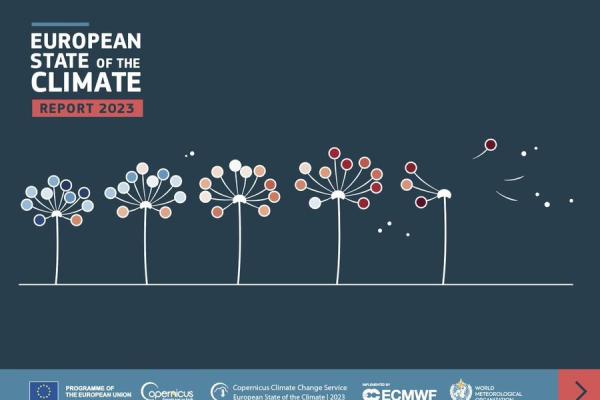
The annual European State of the Climate Report, published jointly by the EU Copernicus Climate Change Service and the UN World Meteorological Organisation (WMO), showcases the continued alarming trend of rising temperatures and climate change impacts across Europe.
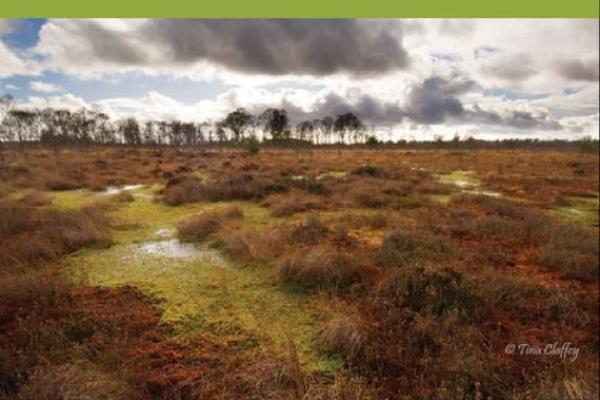
The European Commission has decided to refer Ireland to the Court of Justice of the European Union for failure to apply the Habitats Directive to protect sites designated for raised bog and blanket bog habitats from turf cutting.
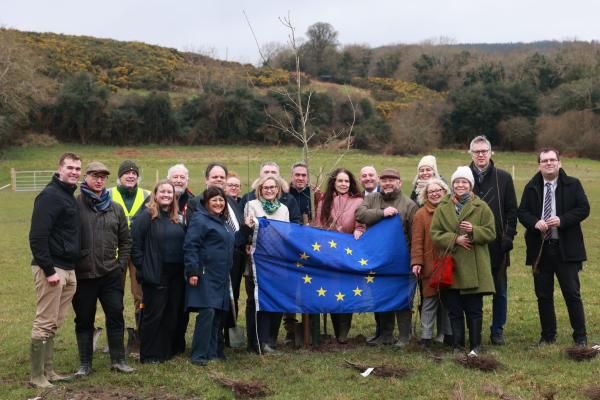
Commissioner Mairead McGuinness helped get National Tree Week off to a great start by at a tree planting event this morning with children from Kilternan Church of Ireland National School, ambassadors from a number of EU countries and European Commission staff.
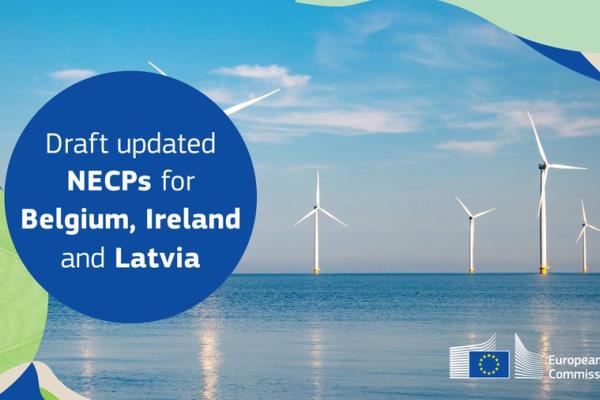
The European Commission has published its assessment of the draft updated National Energy and Climate Plans (NECPs) of Ireland, Belgium and Latvia, which contain recommendations to assist the countries in raising their ambitions in line with EU targets for 2030.